
Mass Timber & Prefabrication: Insights from the 2025 BC Timber Building Technical Tour
Recently, I had the opportunity to participate in the 2025 BC Timber Building Technical Tour, organized by the University of British Columbia’s Centre for Advanced Wood Processing. The tour brought together Builders, Architects, manufacturers, and researchers from across British Columbia to explore the latest advances in mass timber construction, prefabrication, and sustainable building practices.
For anyone building a custom home in Whistler, these developments are increasingly relevant — not as trends, but as practical tools for building better, more resilient homes in a mountain environment.
Touring BC’s Leading Mass Timber & Prefabrication Facilities
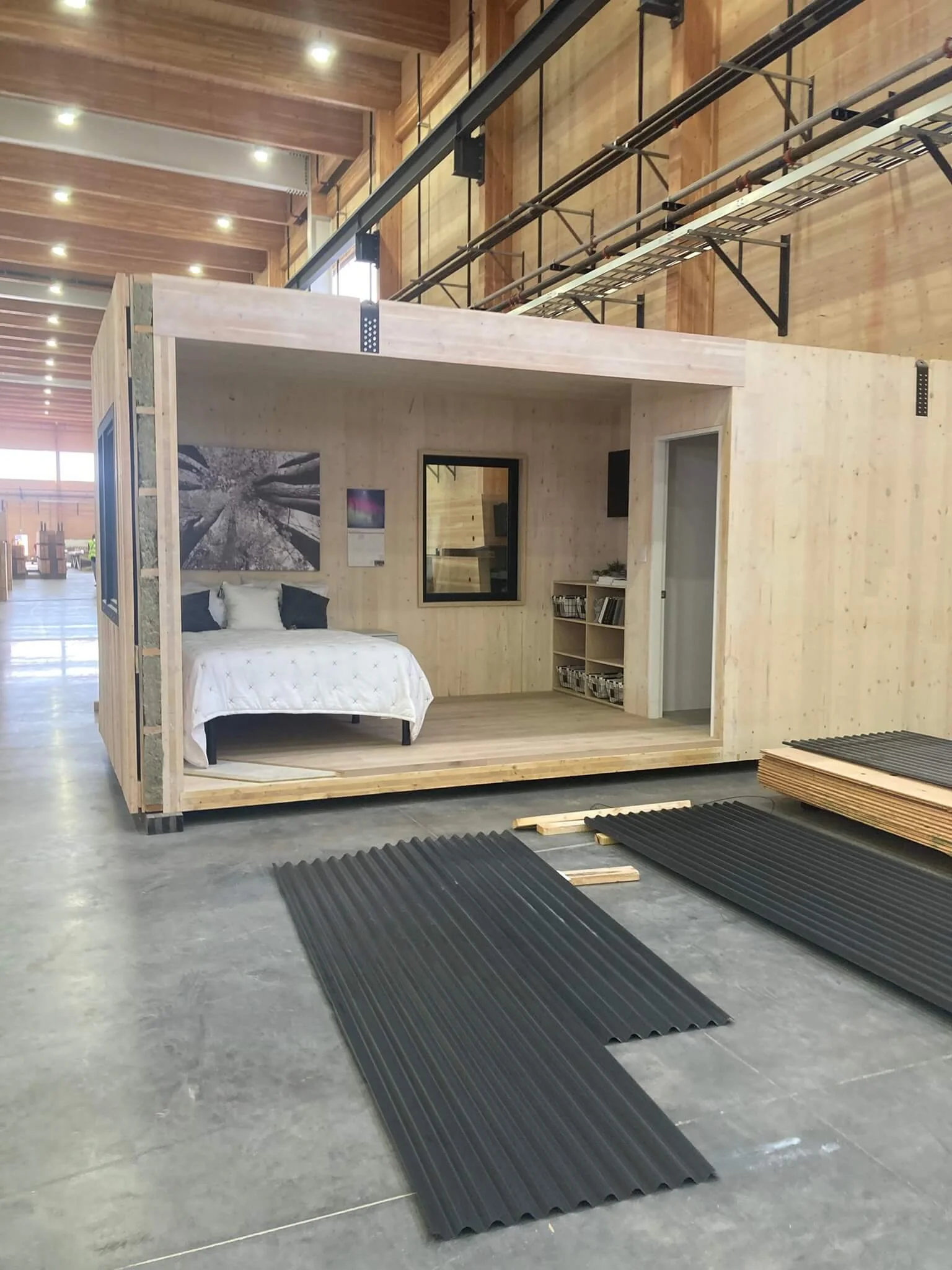
Walking through facilities like Kalesnikoff Mass Timber in Castlegar, the steady hum of automated machinery made one thing clear: construction technology is evolving quickly. Automation, precision manufacturing, and integrated workflows are already improving efficiency, quality, and predictability — particularly valuable in regions with short construction seasons like Whistler.
At several prefabrication facilities, we saw robotic systems handling repetitive tasks with remarkable consistency. These technologies don’t replace skilled trades — they support them by improving precision, reducing rework, and minimizing weather-related delays.
Why Mass Timber & Prefabrication Matter for Whistler Homeowners
For homeowners planning a new build or major renovation in Whistler, mass timber and prefabrication offer tangible benefits that align well with local conditions.
Key Benefits of Prefabrication for Mountain Construction
Off-site labour support
Whistler’s skilled labour pool can be limited, in part due to housing constraints. Prefabrication allows a significant portion of work to be completed off-site, easing pressure on local trades.More predictable costs and schedules
Factory-built components reduce weather-related uncertainty — a major advantage during Whistler’s compressed build season.Shorter on-site timelines
Well-integrated prefabrication can reduce on-site construction time.Reduced waste and improved quality
Panelized and prefabricated framing can reduce framing-related material waste by roughly 30%, while improving consistency and build quality.Higher precision through automation
Automated systems enable tighter tolerances, leading to fewer construction defects and better long-term performance.Alignment with Whistler’s sustainability goals
Mass timber is a low-carbon building material that supports environmentally responsible home construction.
A Key Takeaway from the Tour
One of the most impactful moments came while watching a robotic arm repeatedly fasten wall assemblies with sub-millimeter accuracy. Seeing that level of precision, repeated consistently, highlighted how prefabrication can eliminate many of the common challenges associated with on-site framing in alpine weather conditions.
While efficiency gains were expected, what stood out was how deeply sustainability is integrated into modern mass timber production — from waste-heat recovery to repurposing wood byproducts into secondary materials.



What These Insights Mean for Future Homes in Whistler
The value of attending industry tours like this isn’t just exposure — it’s application. Key takeaways being brought back into future Whistler projects include:
Greater awareness of customization options available through BC-based mass timber suppliers
Exploring new partnerships for high-precision construction in cold-climate environments
Using CLT and glulam systems to achieve longer spans and maximize view corridors
Leveraging off-site framing to support local labour availability and reduce site congestion
Off-site prefabrication can also help reduce pressure on local housing by limiting the duration and size of on-site crews compared to traditional stick-built approaches.
Mass Timber by the Numbers
Mass timber construction can reduce on-site construction activity by approximately 20% compared to comparable concrete or steel structures Read more from the Canadian Wood Council
Cross-laminated timber provides excellent structural strength while being significantly lighter than concrete — often around one-fifth the weight, depending on application
These characteristics help explain why mass timber adoption continues to accelerate across BC.
Considering Mass Timber or Prefabrication for Your Whistler Home?
If you’re planning a custom home or major renovation in Whistler or the Sea-to-Sky corridor, it’s worth exploring whether mass timber or prefabrication could be the right fit. These systems are evolving quickly, and homeowners who understand their potential early are often best positioned to benefit.
Please book a private consultation with us to share your vision and learn more.